Baklava is a beloved Turkish sweet with deep cultural roots, symbolizing celebration and hospitality. You’ll find it made with buttery layers of thin phyllo dough filled with toasted nuts like pistachios or walnuts, then soaked in fragrant honey and lemon syrup. Regional twists and modern developments add unique flavors, while serving it alongside Turkish coffee highlights its rich tradition. If you keep exploring, you’ll uncover more about its history, techniques, and international popularity.
Key Takeaways
- Baklava originated in the Ottoman Empire, symbolizing Turkish hospitality and celebration.
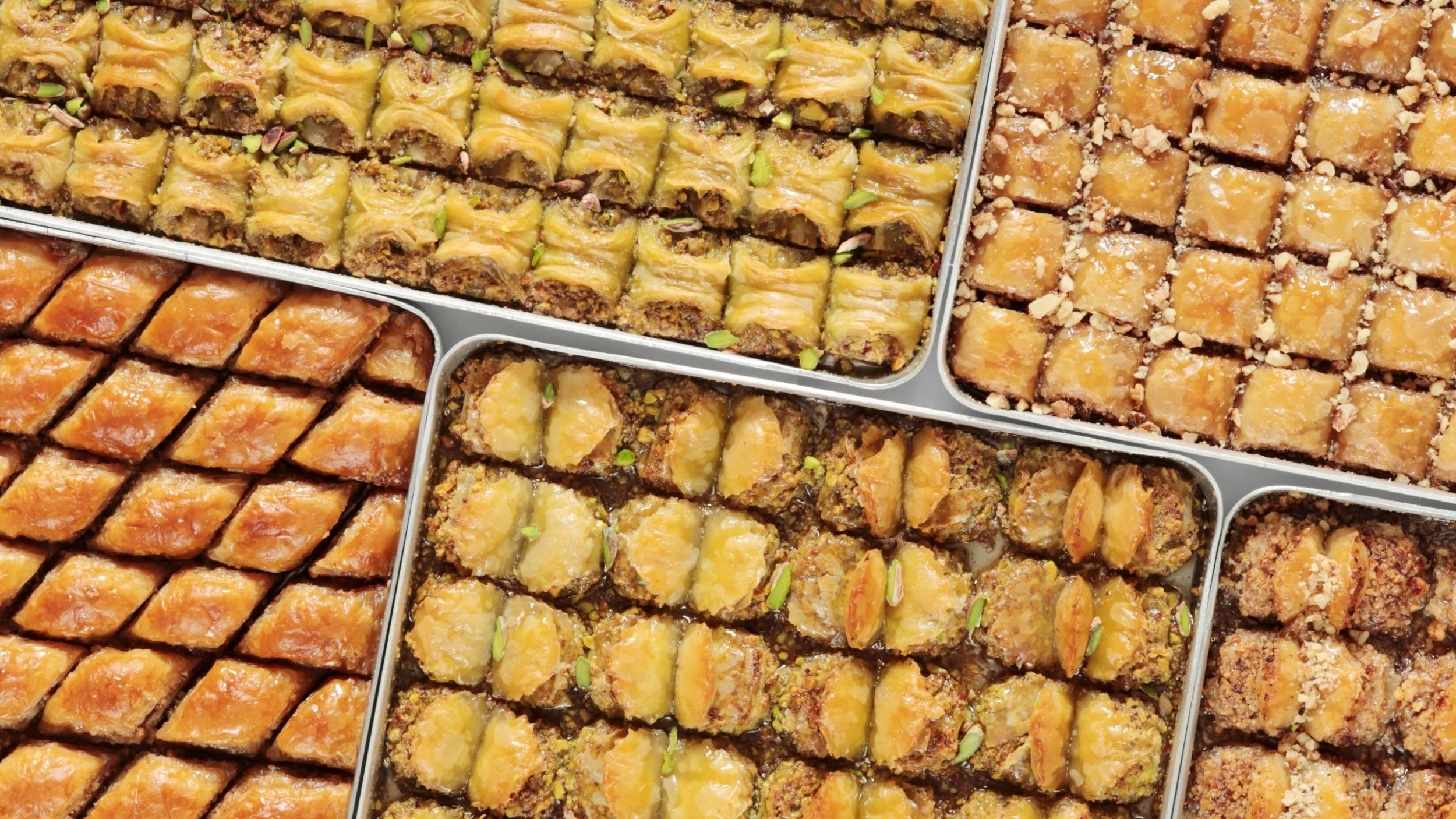
- Authentic Turkish baklava features layered phyllo dough with nuts, spices, and honey-scented syrup.
- Regional variations include Gaziantep’s pistachio and Aegean’s almond and citrus flavors.
- Modern interpretations incorporate fusion ingredients, creative presentation, and international flavors.
- Traditionally served with Turkish coffee, garnished decoratively, emphasizing its cultural and aesthetic significance.
The Historical Roots of Baklava in Turkish Culture
Baklava’s roots run deep in Turkish history, and if you’ve ever tasted this sweet, flaky treat, you’ll understand why it’s become a symbol of celebration and hospitality in the region. Its origins trace back to the Ottoman Empire, where it gained prominence as a culinary symbol of generosity and unity.
Ottoman influence shaped baklava into a luxurious dessert, often reserved for special occasions and royal feasts. The layered pastry, filled with nuts and soaked in honey, reflects a tradition of sharing abundance and welcoming guests with open arms.
This dessert isn’t just about flavor — it’s a powerful cultural emblem, embodying the spirit of Turkish hospitality and the empire’s rich culinary heritage. Baklava invites you to celebrate freedom through its historic, symbolic sweetness.
Ingredients That Make the Perfect Baklava
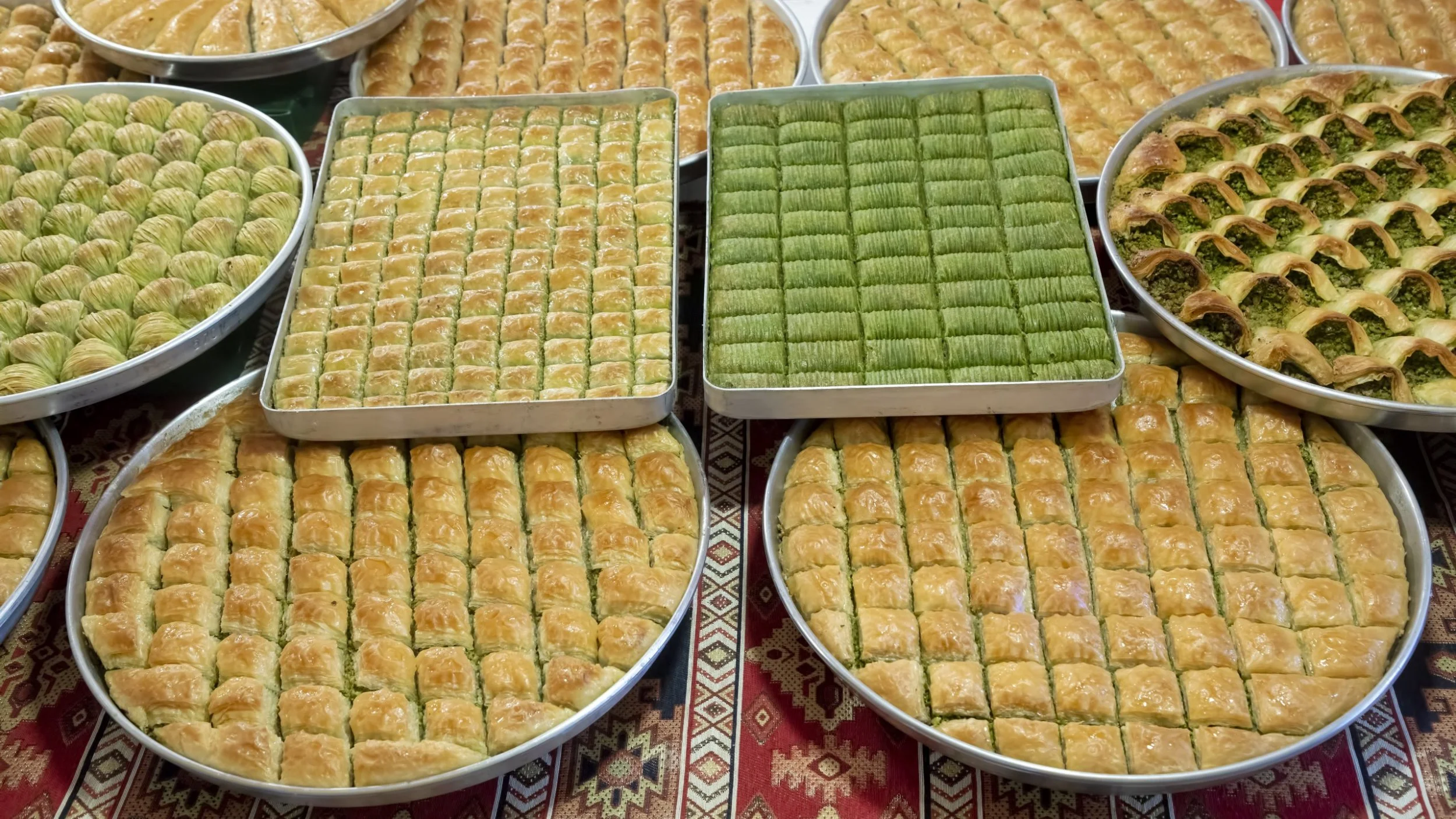
Creating the perfect baklava starts with selecting the right ingredients that bring out its signature flaky texture and rich flavor. You want nutty fillings like chopped walnuts, pistachios, or almonds, which add crunch and depth. These nuts should be fresh and toasted to boost their natural aroma.
Don’t forget the aromatic spices—cinnamon, cloves, and a hint of nutmeg—that infuse each bite with warmth and complexity. The syrup, often infused with honey and lemon, ties everything together with its sweet, fragrant notes.
Quality phyllo dough is crucial too; it must be thin, crisp, and easy to work with. When you combine these ingredients with passion and care, you reveal the true essence of authentic Turkish baklava—deliciously flaky, irresistibly nutty, and perfectly spiced.
Traditional Techniques for Crafting Baklava
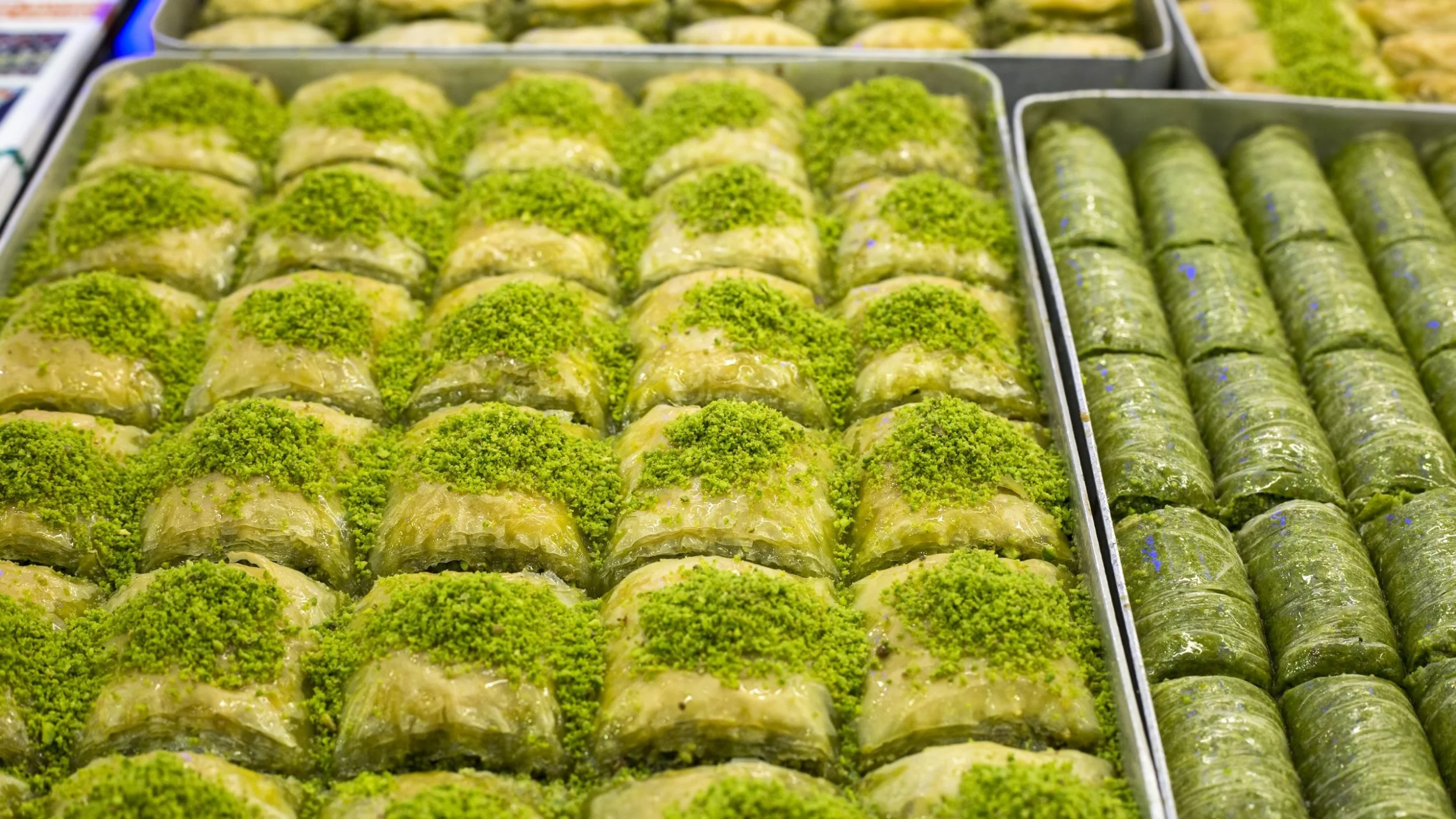
Making authentic baklava starts with preparing the delicate phyllo dough, which requires patience and a gentle touch to keep it thin and manageable.
As you layer and assemble, you’ll want to carefully spread the nuts and butter, creating a symphony of textures that melt in your mouth.
Ultimately, mastering proper baking techniques guarantees the baklava turns golden and crispy without burning, so each piece is perfect to the last flaky layer.
Preparing the Phyllo Dough

Getting the perfect layers of flaky, buttery phyllo dough starts with understanding its delicate nature and handling it with care. When working with phyllo, remember it’s thin, fragile, and prone to drying out quickly. Use clean, dry hands or a brush to keep the sheets moist and manageable.
Follow phyllo dough techniques like stacking sheets carefully and covering unused portions with a damp towel to prevent cracking. Dough preparation tips include gently stretching the dough if needed, but avoid overworking it—patience is key.
Keep your workspace cool and dusted with a little flour to prevent sticking. With a steady hand and a bit of patience, you’ll master the art of crafting those perfect, buttery layers that make baklava irresistibly delicious.
Layering and Assembly Methods

Layering baklava is where your craftsmanship truly shines, and mastering traditional techniques can make all the difference. Think of it like cake decoration—each layer adds texture and flavor, creating a masterpiece you can be proud of.
To achieve that perfect balance, gently brush melted butter between each sheet of phyllo, ensuring crispness and richness. Keep your layers even, avoiding gaps or overlaps that can ruin the presentation.
When stacking, consider the culinary history behind each step—how these methods have been passed down through generations.
For a stunning finish, you might even add a decorative pattern on top before baking. Remember, the joy is in the details—your careful assembly transforms simple ingredients into a delightful work of art.
Proper Baking Techniques
Baking baklava to perfection isn’t just about setting the oven timer and hoping for the best—it’s about mastering traditional techniques that bring out its signature crunch and golden color.
Initially, pay attention to your baking temperature; too high, and the phyllo layers burn before the syrup soaks in, too low, and they turn soggy. Aim for a steady 350°F (175°C) for even baking.
Next, dough elasticity is key—if your dough isn’t flexible enough, the layers won’t puff up nicely. Roll it out thin and work quickly to keep it from drying out.
When baking, keep an eye on the color, and remove once you see that beautiful golden hue.
With these tips, you’ll craft baklava that’s crisp, flaky, and irresistibly delicious every time.
Regional Variations and Unique Flavors
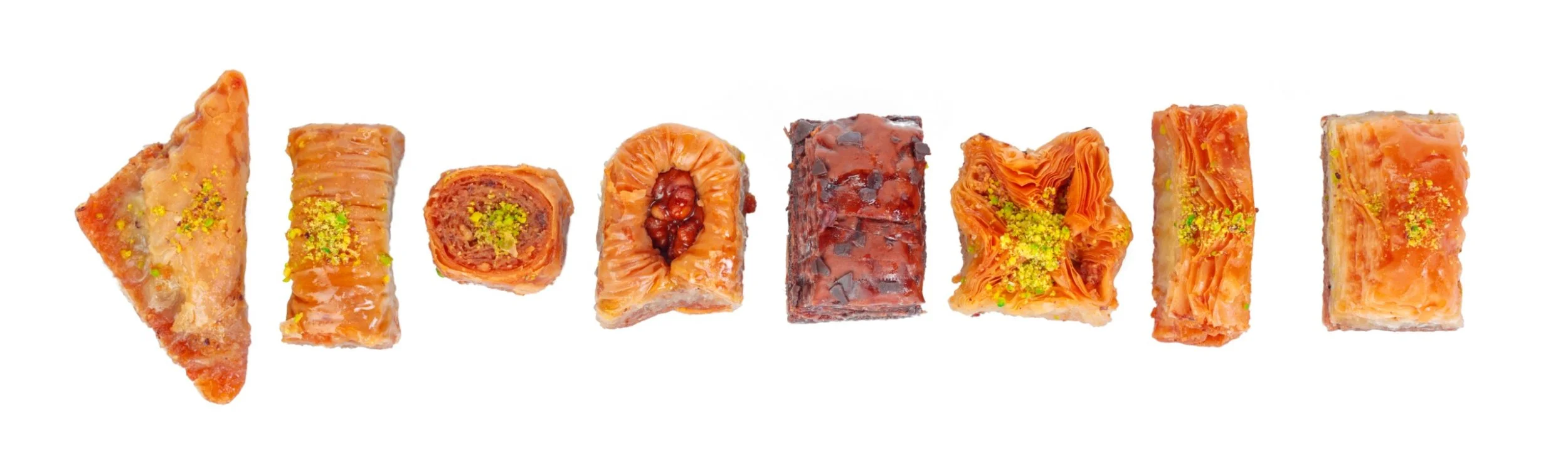
Traveling through the world of baklava reveals a delightful fabric of regional variations and unique flavors that make each version special. In Turkey, you’ll find differences in regional flavors and ingredient variations that showcase local traditions.
For example, in Gaziantep, pistachios reign supreme, adding a lively green and rich taste. Meanwhile, in the Aegean, almonds and citrus hints add a different twist. You might also notice honey versus syrup, which influences sweetness and texture.
Each area puts its spin on the classic, reflecting local ingredients, climate, and history. This diversity invites you to delve into and enjoy an array of baklava styles, each with its distinct personality.
- Pistachios from Gaziantep
- Almonds and citrus in Aegean variations
- Honey versus syrup sweeteners
- Spices like cinnamon or cloves
- Ingredient freshness shaping flavors
The Art of Layering and Baking
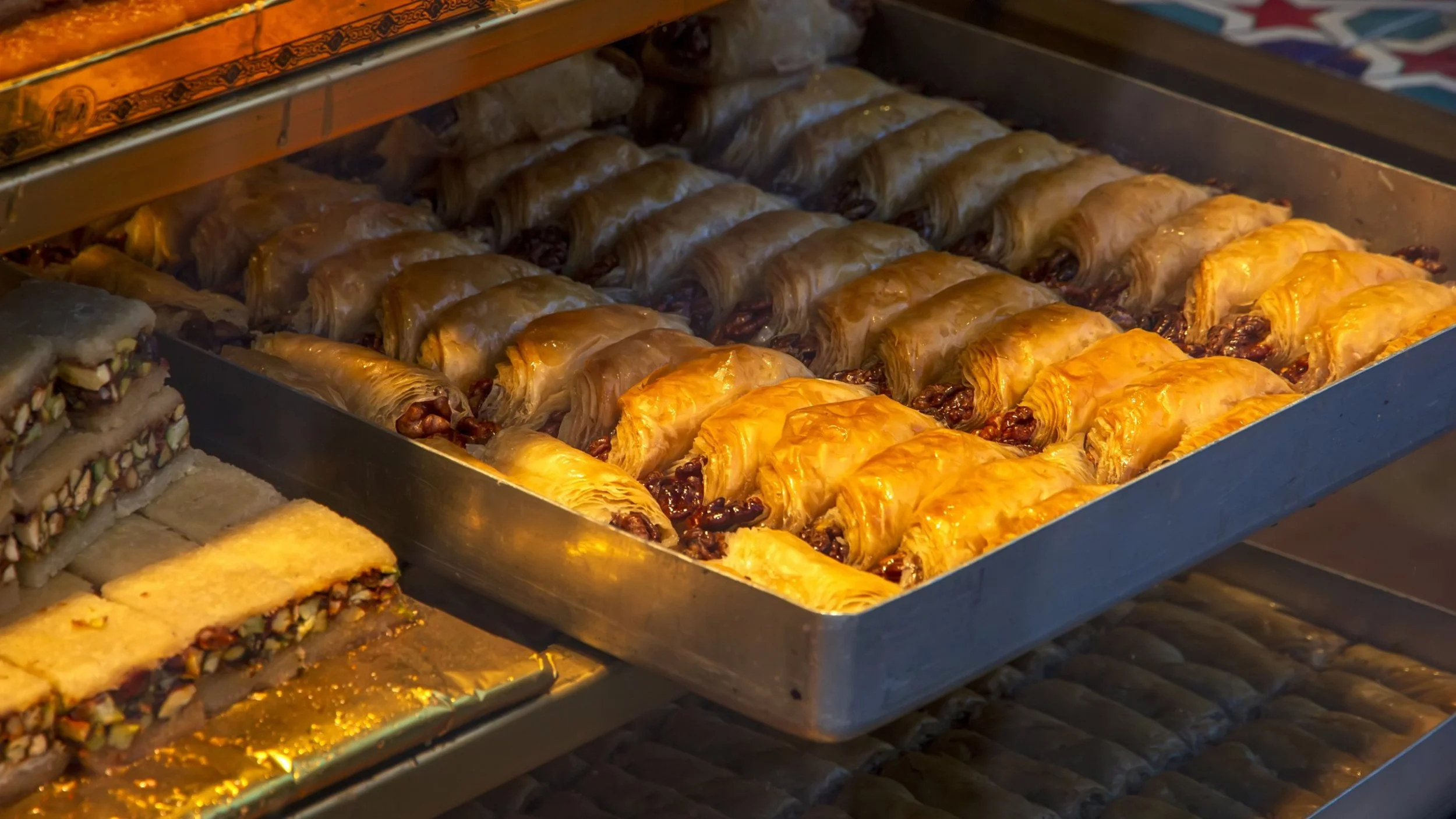
Creating a perfectly layered baklava is like assembling a delicious architectural masterpiece—each sheet and nut placement matters. As you build, think of it like applying ganache techniques in food plating: you want smooth, even layers that hold everything together.
Carefully brush each filo sheet with melted butter, ensuring it’s thin enough to stay light but sturdy enough to support the filling. When baking, keep a close eye to achieve that golden, crispy perfection.
Brush each filo sheet with delicate, melted butter for a light, sturdy layer—watch carefully for that golden, crispy finish.
Once out of the oven, don’t rush—let it cool slightly before cutting. Presentation matters, so consider food plating by arranging each piece with care, maybe drizzling a touch of syrup or dusting with crushed pistachios.
This combination of layering and baking turns baklava into a true edible work of art.
The Role of Honey and Syrups in Flavoring
Honey and syrups aren’t just sweeteners in baklava—they’re the secret ingredients that define its rich, luscious flavor. When you use honey infusion, it adds a floral, slightly tangy note that heightens each bite.
Syrup flavors vary widely, from citrusy to spiced, allowing you to customize your treat. The syrup soaks into the crispy layers, making every piece irresistibly sticky and flavorful.
The honey’s natural sweetness balances the nutty filling, creating a harmony that’s truly addictive. You can experiment with different syrup flavors—rosewater, orange blossom, or cinnamon—each offering a unique twist.
The key is to pour the syrup while the baklava is still warm, sealing in that divine sweetness. This is where your freedom to craft your perfect baklava begins.
- Honey infusion adds depth and complexity
- Syrup flavors can be tailored to your taste
- Proper pouring guarantees maximum flavor absorption
- Floral and citrus notes brighten the comprehensive profile
- Balance sweetness with the richness of nuts
Serving and Pairing Baklava With Turkish Coffee
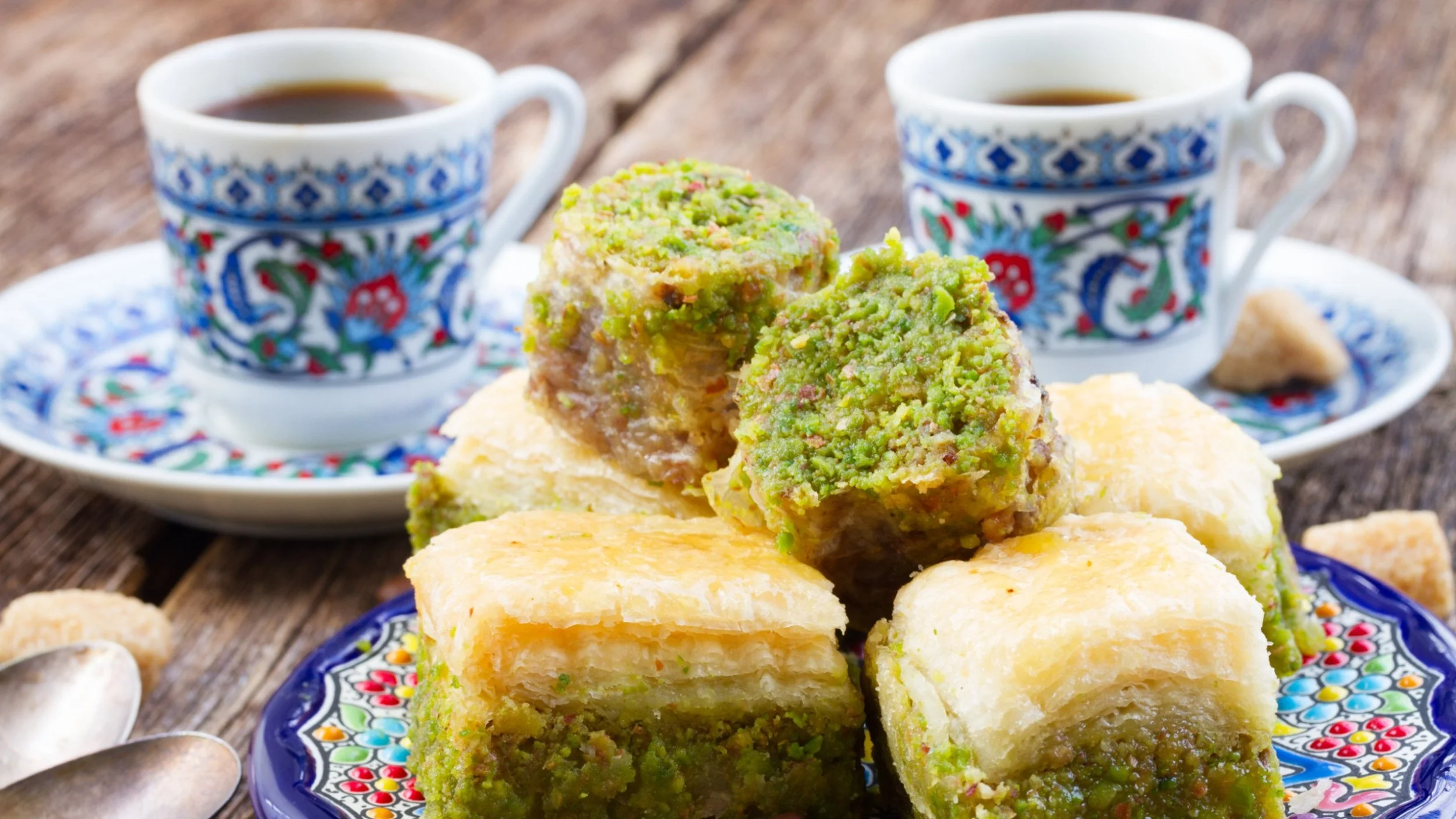
Pairing baklava with Turkish coffee is like bringing together two timeless traditions that improve each other’s flavors. When you serve baklava, consider placing it on a small plate alongside a steaming cup of strong, aromatic Turkish coffee.
The rich sweetness of the baklava balances perfectly with the bold, slightly bitter notes of the coffee, creating a harmony that awakens your senses. For the best coffee pairing, opt for a traditional cezve brew, brewed slowly to highlight its depth.
Serve the baklava slightly warm or at room temperature to enjoy its flaky layers and honeyed richness fully. As a serving suggestion, offer a glass of water to cleanse your palate between bites and sips—an vital touch for a truly authentic experience.
Modern Twists and Global Popularity

Today, baklava is getting a fresh spin with fusion recipes that blend traditional flavors with modern ingredients, creating exciting new twists.
You’ll find it on international dessert menus, where chefs showcase inventive takes like pistachio-mascarpone layers or exotic fruit fillings.
Plus, presentation styles are becoming more groundbreaking, turning baklava into eye-catching treats that look as stunning as they taste.
Fusion Recipes Emerge
As baklava continues to win hearts around the world, cutting-edge chefs are putting their own spin on this historic treat by blending flavors and techniques from different cultures. You’ll find fusion recipes that push boundaries and introduce inventive flavor combinations, making each bite exciting and new.
These creative twists might include adding exotic spices like cardamom or pistachio, or incorporating fruits like figs or berries for a fresh twist. Chefs are also experimenting with different nuts, sweeteners, and even savory elements to surprise your taste buds. It’s all about breaking free from tradition and embracing culinary freedom.
- Combining Middle Eastern and Asian ingredients
- Infusing with unexpected herbs and spices
- Using unconventional nuts and dried fruits
- Incorporating modern baking techniques
- Creating globally inspired flavor mashups
International Dessert Menus

International dessert menus are more thrilling than ever as chefs around the world are putting modern twists on classic favorites. You can now enjoy baklava pairings with unexpected flavors like citrus, pistachio, or even spicy chili, elevating this traditional treat to new heights.
Chefs are also focusing on dessert presentation, turning plates into edible art that entices your eyes before your taste buds. Picture a beautifully layered baklava served alongside fresh fruit, drizzled with honey, or paired with exotic ice creams.
These creative combinations give you the freedom to investigate and enjoy desserts that blend cultural influences with contemporary flair. It’s a delicious adventure that celebrates the world’s love for sweet innovation—so go ahead, indulge your curiosity!
Creative Presentation Styles
Creative presentation styles are transforming how baklava is enjoyed around the world, making each serving a visual feast in addition to a delicious treat. You can investigate decorative plating techniques that turn each piece into art, using colorful syrups, edible flowers, or geometric arrangements. Presentation plating allows you to raise this traditional dessert, blending cultural charm with modern flair.
Imagine stacking baklava in a spiral or creating mini bites on elegant trays—your options are limitless. Play with contrasting textures and lively colors to make each plate pop. These creative twists aren’t just about looks; they invite you to savor every moment of your dessert experience, celebrating freedom in how you present and enjoy this timeless treat.
- Use lively garnishes like pistachios or pomegranate seeds
- Create layered or stacked designs for visual impact
- Incorporate modern shapes, like squares or circles
- Experiment with drizzles of honey or chocolate for flair
- Combine traditional and contemporary elements in your decorative plating
Wrapping Up
Ready to plunge into the world of baklava? Each bite offers a rich blend of history, tradition, and irresistible sweetness that’s hard to forget. From its ancient roots to modern twists, this treat keeps evolving—yet still retains its soul. So, the next time you savor a piece, think about the stories it holds and the surprises that might still be hidden beneath its flaky layers. Who knows what delicious secrets await in your next bite?